
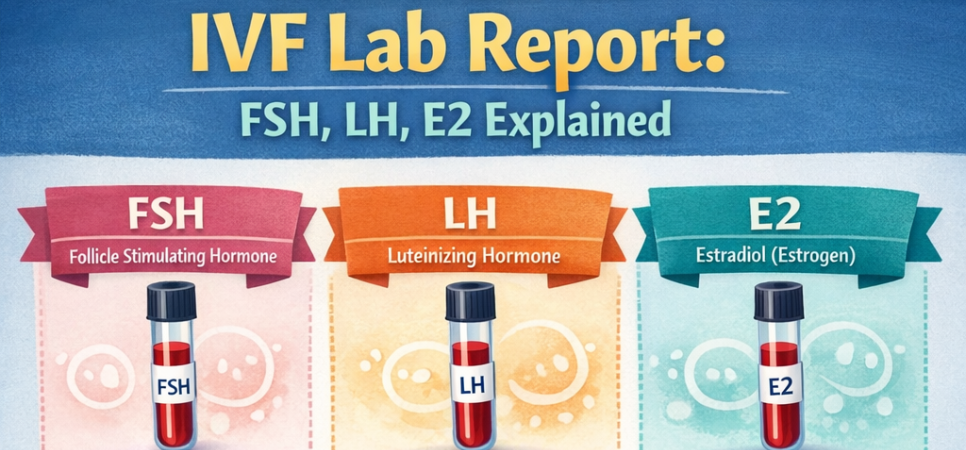
The fertility blood test report is one of the most anxiety-producing documents a couple receives during infertility investigation — not because the numbers are inherently alarming, but because they arrive without adequate explanation. A page of numbers, abbreviations, and reference ranges is handed to the couple — or emailed, or viewed on a patient portal — with the assumption that they will either understand it or ask their doctor about it.
Many couples do neither. They search online for each number, encounter alarming and inconsistent information, form conclusions that may be accurate or may be entirely wrong, and arrive at their next consultation already anxious about results they have misinterpreted.
This article provides a different experience. A complete, plain-language explanation of every major hormone and parameter that appears on a fertility blood test report — what each one measures, what the reference range is, what it means when a result is above or below the expected range, and what the important clinical context is that makes interpretation more nuanced than a simple comparison to the printed reference range.
By the end of this article, the fertility blood test report will be readable — not in the sense of being technically mastered, but in the sense of being understood well enough to know what the results suggest and what questions to ask at the next consultation.
The Basis of Hormonal Testing in Fertility: Why Day 2-3 Matters
Before the individual hormones, a foundational point about the timing of fertility blood tests — because this timing is clinically essential and is often not explained to couples.
The major reproductive hormones — FSH, LH, and estradiol in particular — vary significantly across the menstrual cycle. They are not static measurements. Their levels at any given day of the cycle are determined by the phase of the cycle, and comparing a measurement taken on day ten with the reference range for day two or three produces a misleading result.
The standard fertility hormonal profile — FSH, LH, and estradiol, along with prolactin and TSH which are less cycle-dependent — is measured on day two or three of the menstrual cycle, which is defined as the second or third day of active menstrual bleeding. At this point in the cycle — the early follicular phase — the ovaries are at their most quiescent, no dominant follicle has developed, and the hormones are at the baseline levels that best reflect the underlying regulatory state of the hypothalamic-pituitary-ovarian axis.
When a lab report specifies "Day 2" or "Day 3" at the top — or when the blood draw was scheduled for a specific cycle day — the reference ranges on the report are calibrated to that cycle day. If the blood was drawn on a different day without specification, the results may not be comparable to the reference range.
This context — the cycle day of the blood draw — is the first thing to check on any fertility blood test report.
FSH — Follicle Stimulating Hormone
What it is: FSH is a hormone produced by the pituitary gland — the small gland at the base of the brain that regulates the reproductive hormonal system. It is the primary driver of follicle development in the ovary — the signal that stimulates the cohort of small antral follicles to grow and develop at the beginning of each menstrual cycle.
Normal range on Day 2-3: Approximately 3 to 10 IU/L in most laboratory reference ranges. Different laboratories may use slightly different ranges depending on the assay methodology — always refer to the specific reference range printed on the report.
What a normal FSH means: A day-two FSH within the normal range indicates that the pituitary is producing FSH at an appropriate level to stimulate the ovaries. This is reassuring but not sufficient alone to assess ovarian reserve — it must be interpreted alongside AMH, antral follicle count, and the estradiol level on the same day.
What elevated FSH means: An elevated day-two FSH — above 10 to 12 IU/L in most reference frameworks — indicates that the pituitary is working harder than expected to stimulate the ovaries. This occurs when ovarian reserve is diminished — when the pool of remaining follicles is small, the feedback signals that normally suppress FSH are reduced, and the pituitary compensates by releasing more FSH to recruit the limited available follicles.
Elevated FSH is therefore a marker of reduced ovarian reserve — analogous in clinical significance to a low AMH, though less sensitive and more variable between cycles. A woman whose day-two FSH is 15 IU/L is likely to have reduced ovarian reserve and a poorer response to IVF stimulation than a woman whose day-two FSH is 6 IU/L.
What very elevated FSH means: A day-two FSH above 20 to 25 IU/L suggests severely diminished ovarian reserve — potentially at the level associated with premature ovarian insufficiency. In conjunction with a very low AMH and other clinical findings, very high FSH narrows the options for IVF with own eggs significantly.
The cycle variability of FSH: FSH is more variable between cycles than AMH. A woman can have a normal FSH in one cycle and an elevated FSH in another — depending on random variation in follicular recruitment and feedback dynamics. A single elevated FSH result does not definitively diagnose diminished reserve. A consistently elevated FSH across multiple measurements is more clinically significant.
LH — Luteinizing Hormone
What it is: LH is the second pituitary gonadotropin — the signal that triggers ovulation and stimulates the corpus luteum to produce progesterone in the second half of the cycle. On day two or three of the cycle, LH should be at low baseline levels — comparable to FSH.
Normal range on Day 2-3: Approximately 2 to 8 IU/L in most reference ranges.
What the FSH:LH ratio reveals: In a normal day-two hormonal profile, FSH and LH are approximately equal — a ratio of approximately one to one. In polycystic ovary syndrome (PCOS), the LH is characteristically elevated relative to FSH — producing a reversed FSH:LH ratio in which LH exceeds FSH, sometimes by a factor of two or three. This elevated LH — characteristic of PCOS — drives excess androgen production from the ovarian theca cells and contributes to the anovulation that is the primary fertility consequence of PCOS.
An elevated day-two LH in conjunction with a low or normal FSH — an LH:FSH ratio above 2:1 — is clinically suggestive of PCOS, even in the absence of other diagnostic criteria. It is a specific hormonal signature that the clinician uses as one of the inputs in assessing the clinical picture.
The LH surge and ovulation monitoring: Separately from the day-two baseline measurement, LH is also measured in the context of ovulation monitoring — either in blood tests or in urine LH test strips. The LH surge — a sharp, rapid rise in LH that occurs approximately 24 to 36 hours before ovulation — is the hormonal trigger for egg release. Ovulation monitoring measures LH daily or every other day in the days approaching expected ovulation, and the detection of the LH surge allows accurate timing of intercourse, IUI, or the trigger injection in ovulation induction or natural cycle IVF.
E2 — Estradiol
What it is: E2, or estradiol, is the primary estrogen produced by the granulosa cells of developing ovarian follicles. It is the hormone that builds the endometrial lining during the first half of the menstrual cycle, and it is the key readout of follicular development during IVF stimulation monitoring.
Normal range on Day 2-3: Approximately 20 to 70 pg/mL (or 73 to 257 pmol/L in SI units). Very low estradiol on day two or three is expected — the follicles are small and not yet producing significant estrogen.
The significance of elevated Day 2-3 estradiol: When the day-two or day-three estradiol is elevated — above 70 to 80 pg/mL — it typically indicates that a follicle has already begun developing ahead of the expected timing. An elevated baseline estradiol suppresses FSH through negative feedback, which may make the FSH appear falsely normal even in a patient with diminished reserve. Elevated day-two estradiol also suggests that the current cycle is not truly at baseline — there is already follicular activity — which may affect the decision about when to start a stimulation cycle.
Estradiol during IVF stimulation monitoring: During the stimulation phase of an IVF cycle, estradiol is measured at each monitoring visit — typically every two to three days — alongside the ultrasound assessment of follicle number and size. Rising estradiol during stimulation reflects the growing follicles' increasing hormone production and provides an indirect measure of the overall response.
Estradiol levels during stimulation are interpreted together with ultrasound findings rather than in isolation. A rising estradiol with growing follicles confirms that the stimulation is working. An estradiol that is rising very steeply — with many large follicles — may signal the risk of ovarian hyperstimulation syndrome (OHSS), particularly in patients with PCOS and high AMH.
AMH — Anti-Müllerian Hormone
What it is: As described in comprehensive detail in our dedicated AMH article, AMH is produced by the granulosa cells of small antral follicles and reflects the size of the remaining ovarian follicular pool — the ovarian reserve.
Normal range: Approximately 1.5 to 4.0 ng/mL for women in their late twenties to mid-thirties. Ranges vary significantly by age — younger women typically have higher AMH. AMH does not vary significantly with the cycle day and can be measured at any time.
What low AMH means: Reduced ovarian reserve — fewer follicles remaining than expected for the patient's age. The clinical implications are described in detail in the low AMH article.
What high AMH means: A large ovarian follicular pool — found in young women and characteristically elevated in PCOS, where the large number of small antral follicles produces high AMH. Very high AMH — above 5 to 6 ng/mL — is associated with OHSS risk in IVF stimulation and requires careful protocol design.
Prolactin
What it is: Prolactin is a hormone produced by the pituitary gland that, in the context of fertility, suppresses ovulation when elevated. It is normally high during breastfeeding — its physiological function is to sustain milk production and suppress the return of ovulation postpartum.
Normal range in a non-breastfeeding woman: Approximately 2 to 29 ng/mL, depending on laboratory methodology.
What elevated prolactin means: Hyperprolactinemia — elevated prolactin — suppresses the hypothalamic-pituitary-ovarian axis, producing irregular cycles or anovulation. Causes include a benign pituitary adenoma (prolactinoma), certain medications (including antidepressants, antipsychotics, and some antihypertensives), hypothyroidism, and physiological causes such as stress, recent sexual activity, breast stimulation, or strenuous exercise before the blood draw.
The timing of the blood draw matters for prolactin — levels are highest in the morning and are affected by the above physiological factors. An elevated prolactin result should be confirmed on a repeat fasting morning sample before being accepted as clinically significant.
Treatment: When hyperprolactinemia is confirmed, dopamine agonist medications — cabergoline or bromocriptine — normalize prolactin levels, restore ovulatory cycling, and significantly improve fertility outcomes.
TSH — Thyroid Stimulating Hormone
What it is: TSH is produced by the pituitary in response to thyroid hormone levels, stimulating the thyroid gland to produce more hormone when levels are low. It is the primary biochemical measure of thyroid function.
Normal laboratory range: Approximately 0.4 to 4.5 mIU/L in most general laboratory reference ranges.
The fertility-specific target: As described in our dedicated thyroid and infertility article, the general laboratory normal range is not the appropriate target for women undergoing IVF. The fertility-specific target for TSH in women planning IVF or pregnant is below 2.5 mIU/L. A TSH of 3.8 mIU/L is normal by laboratory standards but suboptimal for fertility.
Anti-TPO antibodies: Thyroid antibodies — anti-thyroid peroxidase antibodies — are not always included in the standard fertility hormonal profile but should be specifically measured. Elevated anti-TPO antibodies in a euthyroid woman (normal TSH) are independently associated with higher miscarriage rates and lower IVF live birth rates, and their presence warrants specific monitoring and management even when TSH is currently normal.
Progesterone
What it is: Progesterone is produced by the corpus luteum after ovulation and is the hormone that prepares the endometrium for implantation and, if pregnancy occurs, supports the early pregnancy until the placenta takes over progesterone production.
In the fertility context: A mid-luteal progesterone — measured approximately seven days after ovulation, on approximately day twenty-one of a regular twenty-eight-day cycle — provides confirmation that ovulation has occurred. A level above 3 to 5 ng/mL confirms recent ovulation.
During IVF stimulation: A rising progesterone during the late stimulation phase — above 1.5 to 2 ng/mL on the day of trigger — may indicate premature luteinization — the corpus luteum beginning to form before the optimal egg maturation timing — and is one of the clinical indicators for a freeze-all strategy rather than a fresh transfer.
During the luteal phase of IVF: Post-transfer progesterone measurement is used — when intramuscular or subcutaneous progesterone is being used — to confirm that supplementation is achieving adequate systemic levels. As noted in our luteal phase support article, vaginal progesterone produces high local endometrial levels with lower blood levels, making serum measurement unreliable for vaginal supplementation.
Reading the Report: A Practical Approach
When the fertility blood test report arrives, the practical approach to reading it follows this sequence.
Identify the day of the cycle on which the blood was drawn. This determines whether the reference ranges apply to the specific measurements.
Check FSH. Above the reference range — particularly above 10 to 12 IU/L — suggests reduced ovarian reserve. Below the reference range alongside low LH may suggest pituitary or hypothalamic dysfunction.
Check LH and the FSH:LH ratio. LH greater than FSH on day two or three — particularly if the LH:FSH ratio exceeds two to one — is suggestive of PCOS.
Check estradiol. Elevated baseline estradiol — above 70 to 80 pg/mL — on day two or three suggests an active follicle and may indicate that the current cycle is not at baseline.
Check AMH. Compare the result against the age-appropriate reference rather than the general reference — because AMH declines naturally with age and the clinical significance of a result depends on its relationship to age-expected values.
Check prolactin. If elevated, consider whether the blood was drawn under optimal conditions before accepting the result as clinically significant.
Check TSH. Compare against the fertility-specific target of below 2.5 mIU/L rather than the general laboratory range.
Note any results without an explanation. Every result that is outside the printed reference range, and every result that is unexpected given the clinical picture, deserves a specific question at the next consultation.
Your Next Step
If you have a fertility blood test report that you would like to understand more specifically — or if you want to know what the results of your specific hormonal profile mean for your IVF prognosis and protocol — a consultation with Dr. Ashish Soni at Metro IVF in Ambikapur provides the most thorough and specifically explained interpretation available.
Numbers on a page are information. Understanding what they mean for your specific clinical situation is what the consultation provides.
Metro IVF Test Tube Baby Center Ambikapur, Chhattisgarh metrofretility.in Led by Dr. Ashish Soni — North India's First Fertility Super Specialist
Understanding your lab report is the beginning of informed decision-making. Book your consultation with Dr. Ashish Soni at Metro IVF today.